




Why Meibography is Essential Before Cataract Surgery
🔍1. Detecting Meibomian Gland Dysfunction (MGD) Early
MGD is the leading cause of evaporative dry eye, which is common in older patients—the same demographic undergoing cataract surgery.
Many patients are asymptomatic or underreport symptoms. Meibography helps uncover subclinical disease by visualizing gland dropout and structural damage.
🧪2. Improving Ocular Surface Stability for Accurate Biometry
Preoperative measurements like keratometry and corneal topography are critical for IOL power calculation, especially for premium lenses (e.g., toric, multifocal).
MGD-induced tear film instability can lead to fluctuating or inaccurate measurements, affecting surgical outcomes.
Treating MGD before surgery helps ensure reliable, reproducible data.
👁️3. Preventing Postoperative Dry Eye and Patient Dissatisfaction
Cataract surgery itself can exacerbate pre-existing dry eye and meibomian gland dysfunction.
Patients may experience blurred vision, discomfort, or fluctuating vision post-surgery due to worsened ocular surface disease.
Identifying and managing MGD in advance can reduce postoperative complaints and improve patient satisfaction.
📈4. Supporting Informed Decision-Making
If significant gland loss is detected, patients can be counseled about realistic expectations and the importance of preoperative treatment.
Helps surgeons decide whether to delay surgery until the ocular surface is optimized.
🟦MeiboVue: Enhancing Cataract Surgery Outcomes with Preoperative Meibography
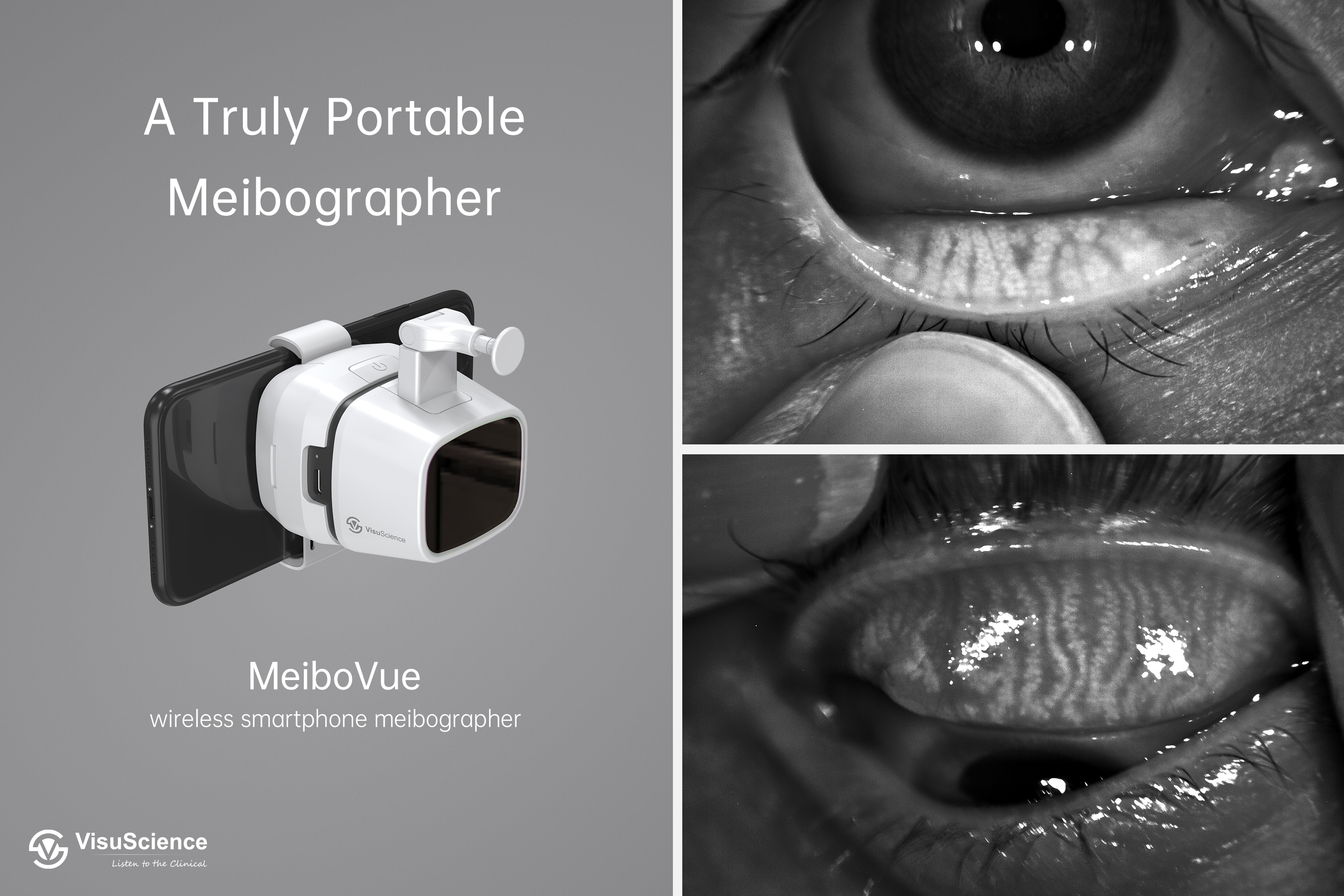
MeiboVue is a portable, high-resolution meibography system designed to support cataract surgeons in identifying and managing meibomian gland dysfunction (MGD) before surgery.
By providing clear imaging of gland structure, MeiboVue enables early detection of ocular surface disease, ensuring more accurate IOL calculations and helping to prevent postoperative dry eye symptoms.
Seamlessly integrated into the preoperative workflow, MeiboVue empowers eye care teams to optimize surgical planning and improve patient satisfaction.
🔍1. Detecting Meibomian Gland Dysfunction (MGD) Early
MGD is the leading cause of evaporative dry eye, which is common in older patients—the same demographic undergoing cataract surgery.
Many patients are asymptomatic or underreport symptoms. Meibography helps uncover subclinical disease by visualizing gland dropout and structural damage.
🧪2. Improving Ocular Surface Stability for Accurate Biometry
Preoperative measurements like keratometry and corneal topography are critical for IOL power calculation, especially for premium lenses (e.g., toric, multifocal).
MGD-induced tear film instability can lead to fluctuating or inaccurate measurements, affecting surgical outcomes.
Treating MGD before surgery helps ensure reliable, reproducible data.
👁️3. Preventing Postoperative Dry Eye and Patient Dissatisfaction
Cataract surgery itself can exacerbate pre-existing dry eye and meibomian gland dysfunction.
Patients may experience blurred vision, discomfort, or fluctuating vision post-surgery due to worsened ocular surface disease.
Identifying and managing MGD in advance can reduce postoperative complaints and improve patient satisfaction.
📈4. Supporting Informed Decision-Making
If significant gland loss is detected, patients can be counseled about realistic expectations and the importance of preoperative treatment.
Helps surgeons decide whether to delay surgery until the ocular surface is optimized.
🟦MeiboVue: Enhancing Cataract Surgery Outcomes with Preoperative Meibography
MeiboVue is a portable, high-resolution meibography system designed to support cataract surgeons in identifying and managing meibomian gland dysfunction (MGD) before surgery.
By providing clear imaging of gland structure, MeiboVue enables early detection of ocular surface disease, ensuring more accurate IOL calculations and helping to prevent postoperative dry eye symptoms.
Seamlessly integrated into the preoperative workflow, MeiboVue empowers eye care teams to optimize surgical planning and improve patient satisfaction.